
The Fossa Magna has been appearing more frequently in the news, with reports on the Nankai Trough earthquake and potential eruptions of Mt. Fuji. Itoigawa, a small city in Niigata Prefecture located along this fault zone, is known as the birthplace of jade in Japan. I visited the Fossa Magna Museum and a day-use hot spring, and experienced the earth firsthand.
Fossa Magna Museum
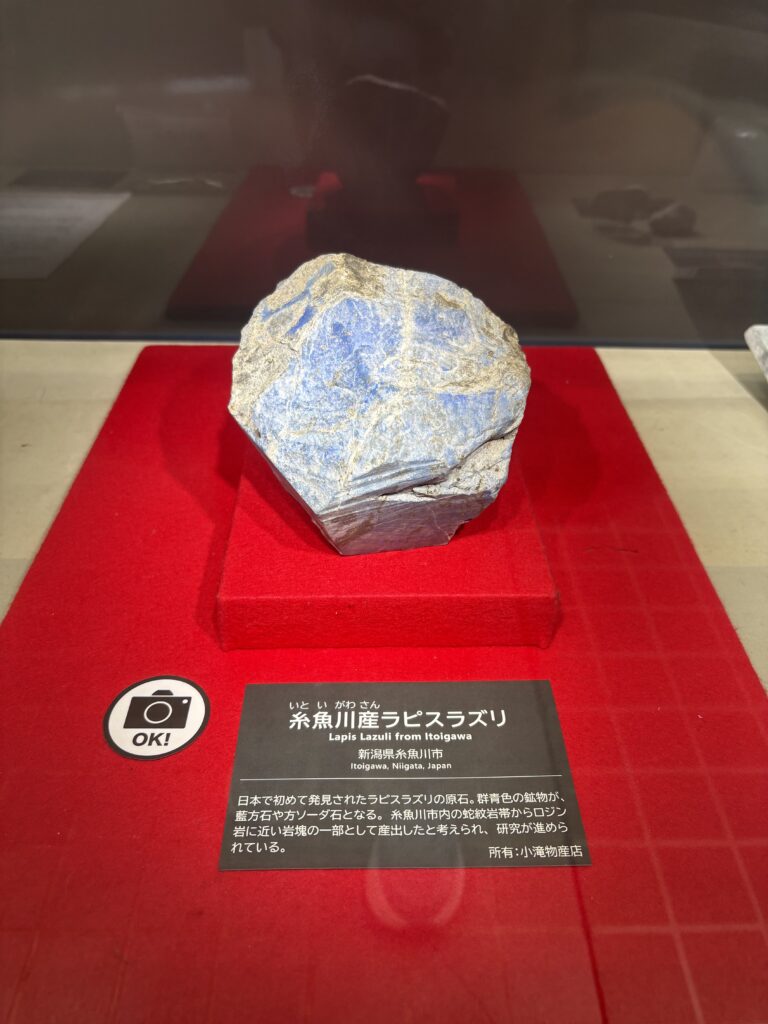

This museum is enjoyable not only for those interested in minerals, fossils, and geology, but for anyone. A 200-inch screen presents footage of the formation of the Japanese archipelago and the Fossa Magna, making it easy to understand visually rather than through text alone. Combined with the adjacent Chojagahara Archaeological Site and Museum, you can easily spend half a day here. I recommend taking your time when you visit.
During my visit, the talk of the moment was the discovery of lapis lazuli confirmed for the first time in Japan, announced in February 2026 by a research team from the National Museum of Nature and Science. It is a deep blue gemstone with over 7,000 years of history, and until now, Afghanistan was said to be virtually the only source of gem-quality rough stone. A specimen from the Himekawa River basin in Itoigawa was confirmed, and the actual stone has been on display in the Hometown Exhibition Room since March 7, 2026 (until August 30, 2026, free admission). Apparently, the simultaneous occurrence of both jade and lapis lazuli in one location is unheard of anywhere else in the world — it was a reminder of just how fascinating and mysterious the geology here is.
On weekends, a stone identification service is also available (lottery ticket required).
- Admission: Adults ¥700 / Elementary, junior high, and high school students ¥300
- Hours: 9:00–17:00 (last entry 16:30)
- Closed: Mondays from December through February, the day after public holidays, December 28–January 4
Fossa Magna Itoigawa Hot Spring — Hisuinoyu
This day-use hot spring is about a 10-minute drive from the museum. It is a rare fossil seawater hot spring on the Sea of Japan side, with a distinctive character. The facility’s website describes it as follows:
“Hisuinoyu is a rare fossil seawater hot spring on the Sea of Japan side. One of its defining features is the distinctive oily scent that rises from the water. This is evidence that ancient seawater was trapped deep underground and, over vast stretches of time, became rich in minerals and organic components. This precious hot spring rises from approximately 1,000 meters below the Fossa Magna, the great fault that divides the Japanese archipelago east and west. The source temperature reaches around 100°C, with a generous flow of 1,500 liters per minute.”
When I actually got in, the smell was closer to petroleum than sulfur. It was just a faint scent for me and didn’t bother me at all, but those sensitive to strong odors may want to take note. The water has a crisp quality and is a light brownish color. With an outdoor bath, bubble bath, and sauna all available, you can easily lose track of time moving between them.
The facility is spacious, perhaps owing to its connection to the adjacent hotel. On the Sunday I visited, it was bustling with local residents. A set of bath towel and face towel is available to rent for ¥200, so you can stop by without bringing anything.
Bathing in a hot spring while feeling the earth beneath you was a valuable experience.
- Hours: 10:00–22:00 (last entry 21:30), open year-round
- Admission: Daytime (until 16:00) Adults ¥1,000 / Children ¥550 — Evening (16:00–) Adults ¥800 / Children ¥500
- TEL: 025-553-2222
Other Spots Worth Checking Out
Itoigawa has many points of interest scattered throughout the area, including places that could make great material for school projects.
Jade Beach Stone Hunting (Itoigawa, Susawa, Oyashirazu beaches, etc.)

These beaches are covered in pebbles rather than sand, and if you are lucky, you might find a piece of jade. The Fossa Magna Museum also offers stone identification services.
Kotakigawa Jade Gorge

Confirmed in 1939 as Japan’s first jade deposit, this site is a nationally designated natural monument. You can see jade boulders naturally polished by the river up close. Please note that collecting stones is prohibited, and the area closes during winter.
Itoigawa UNESCO Global Geopark
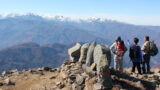
The entire city is designated as a UNESCO Global Geopark, with natural highlights including Takanami Pond scattered throughout the area.
Renge Shiraike (White Pond)

Located along the road to Renge Onsen, this pond is known for its mirror-like surface. Skunk cabbage blooms in spring and autumn foliage is also beautiful. Open from mid-June to early November.
Important Notes for Visitors
Respect for Nature and Local Rules Itoigawa’s beautiful jade and unique geological features are precious natural treasures. When visiting, please show respect for the local environment and the community. Always follow local regulations—for example, while you can enjoy stone hunting on designated beaches, collecting stones is strictly prohibited in protected areas like the Kotakigawa Jade Gorge. Let’s preserve this wonderful landscape for future generations.
Note on Tattoos at Hot Springs Please be aware that “Hisuinoyu” and many other public hot springs in Japan typically do not allow guests with tattoos to enter the bathing areas. If you have tattoos, we strongly recommend contacting the facility in advance to check their specific policy or to ask about private bathing options.